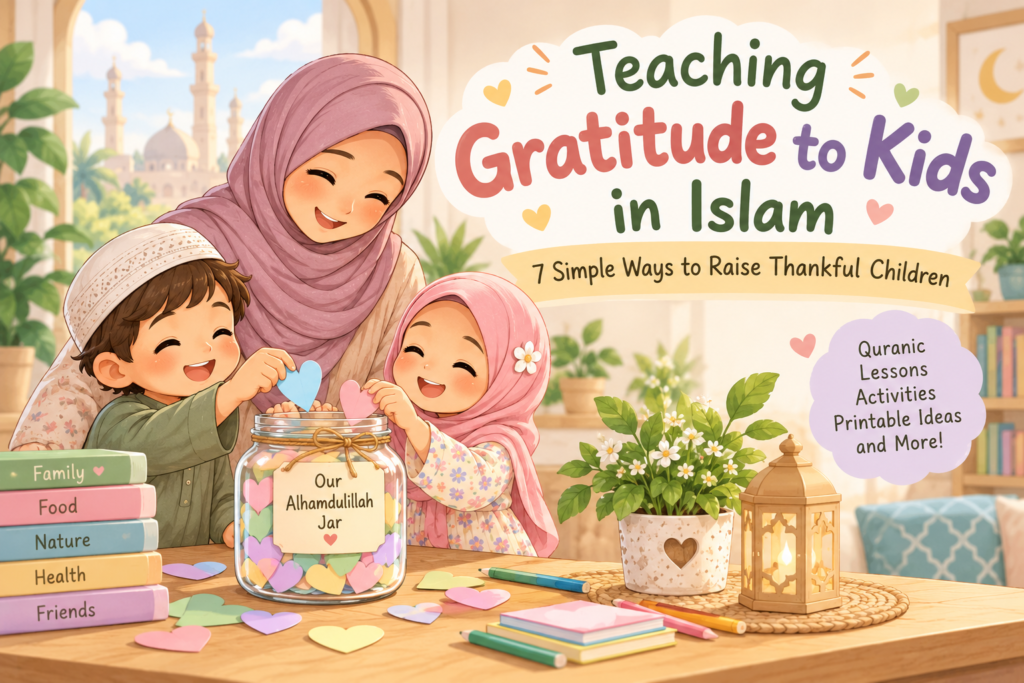
Teaching Gratitude to Kids in Islam
Help your child discover the beauty of saying Alhamdulillah through Quranic lessons, meaningful conversations, and fun Islamic activities.
Have you ever given your child something special, only to hear, “But I wanted the other one!”?
Or perhaps your child has a room full of toys but still says, “I have nothing to play with!”
As parents, we want our children to appreciate what they have, recognize the blessings around them, and grow into kind, content, and thankful individuals. But teaching gratitude isn’t always as simple as reminding them to say “thank you.”
In Islam, gratitude is much more than good manners. It is an important part of our relationship with Allah.
When children learn to say Alhamdulillah (All praise is due to Allah), they begin to recognize that the food they eat, the family who loves them, the rain that falls, and even the ability to smile are blessings from Allah.
The beautiful thing is that gratitude doesn’t need to be taught through long lectures. It can grow naturally through everyday conversations, small family traditions, Quranic stories, and simple hands-on activities.
In this guide, we’ll explore how to teach gratitude to children in Islam, why it matters, and seven practical ways to make thankfulness part of your family’s daily life.
What Is Gratitude (Shukr) in Islam?
In Arabic, gratitude is called Shukr (شكر). Shukr means recognizing and appreciating the blessings Allah has given us and responding to them with thankfulness.
For young children, we can explain it:
“Shukr means remembering all the wonderful things Allah has given us and thanking Him for them.”
Islam teaches us that everything we have is ultimately a blessing from Allah.
Allah says in the Quran:
“And whatever you have of favor—it is from Allah.”
Surah An-Nahl (16:53)
This beautiful verse helps children understand that Allah is the source of our blessings.
Our eyes help us see beautiful things. Our ears allow us to hear the voices of people we love. Our hands help us eat, draw, play, and help others.
Even things we sometimes take for granted, such as clean water, a comfortable bed, and a warm meal, are blessings worth appreciating.
The Three Ways We Show Gratitude

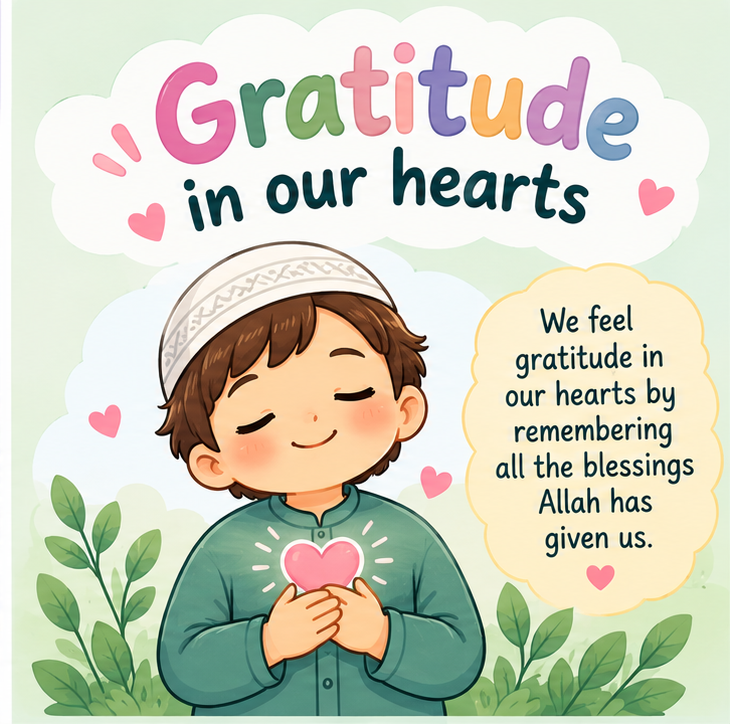
Gratitude in our hearts
We recognize that our blessings come from Allah.
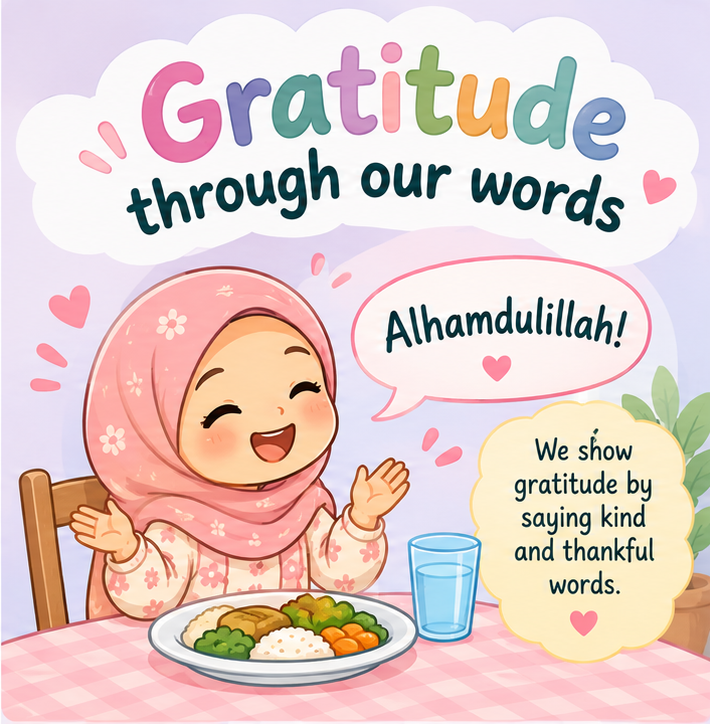
Gratitude through our words
We praise and thank Allah by saying Alhamdulillah.
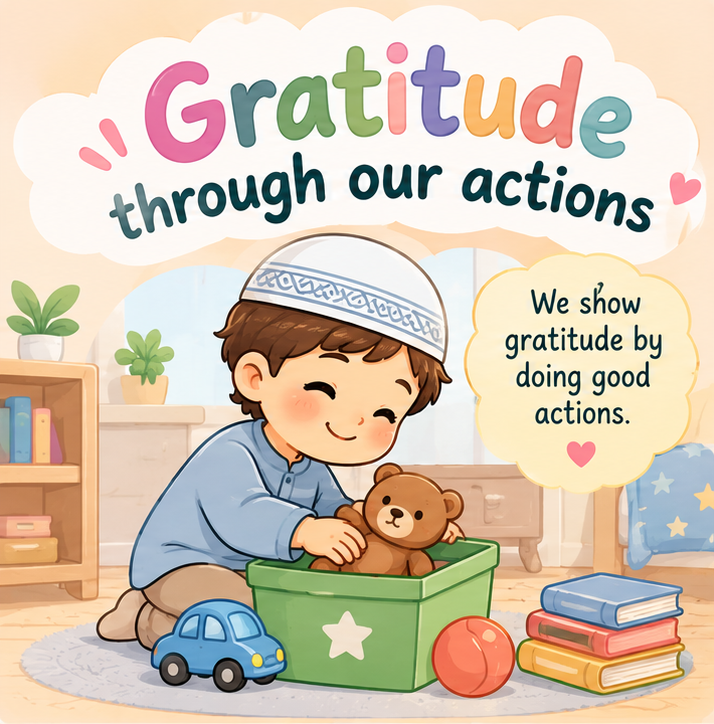
Gratitude through our actions
We use Allah's blessings in good ways, such as sharing food, helping others, and taking care of our belongings.
Why Is Teaching Gratitude Important for Children?
Gratitude is a beautiful Islamic value that also helps children develop positive everyday habits.
It helps children appreciate what they already have
Children naturally become excited about new toys, games, and experiences. However, they may quickly move on to wanting something else.
Practicing gratitude helps them notice and appreciate the things they already enjoy.
It encourages kindness and generosity
When children recognize that they have been blessed with something, they can begin to understand the importance of sharing those blessings.
For example, a child who appreciates having school supplies may be encouraged to donate pencils or notebooks to another child.
It helps children notice everyday blessings
Not every blessing is something we can buy or hold.
A loving hug, a sunny morning, a good friend, or the opportunity to learn something new can all become moments of gratitude.
It strengthens their connection with Allah
Most importantly, gratitude helps children remember Allah throughout their day.
Rather than thinking about Allah only during Salah or Islamic lessons, they begin to connect everyday experiences with their faith.
When they enjoy a delicious meal, they remember Allah.
When they see a beautiful flower, they remember Allah.
When something wonderful happens, they say Alhamdulillah.
Over time, these small moments can help nurture a loving and meaningful relationship with their Creator.
What Does the Quran Teach Us About Gratitude?
One of the most beautiful Quranic reminders about gratitude appears in Surah Ibrahim.
Allah says:
“If you are grateful, I will surely increase you [in favor].”
Surah Ibrahim (14:7)
This verse reminds us of the importance of being thankful to Allah. For children, parents can explain:
“Allah loves when we recognize His blessings and thank Him. He has promised an increase to those who are grateful.”
It is important not to teach children that saying Alhamdulillah will automatically bring them more toys, sweets, or presents.
Allah’s blessings come in many forms, including guidance, contentment, opportunities to do good, and other favors He chooses to grant.
A Quranic Example: Prophet Sulayman (AS)
Prophet Sulayman (AS) was blessed by Allah with extraordinary abilities and a great kingdom.
In Surah An-Naml, the Quran tells us how Prophet Sulayman (AS) understood the speech of an ant and smiled at its words. He then made a beautiful dua:
“My Lord, enable me to be grateful for Your favor which You have bestowed upon me and upon my parents…” Surah An-Naml (27:19)
Even though Prophet Sulayman (AS) had been given so many blessings, he turned to Allah with gratitude.
This teaches children an important lesson:
No matter how much or how little we have, we should always remember to thank Allah.
Seven Simple Ways to Teach Gratitude to Kids in Islam
The best way to teach gratitude is to make it part of everyday family life.
Here are seven practical activities that require very little preparation
Start the Day with Alhamdulillah
Mornings are a wonderful opportunity to remind children of Allah’s blessings.
When your child wakes up, encourage them to thank Allah for another day.
You can say:
“Alhamdulillah! Allah has given us another beautiful day. What is one thing you’re looking forward to today?”
For older children, gradually introduce the authentic Sunnah dua for waking up:
Alhamdu lillahil-ladhi ahyana ba’da ma amatana wa ilayhin-nushur.
Meaning: All praise is for Allah who gave us life after causing us to die, and to Him is the resurrection.
Reference: Sahih al-Bukhari 6312.
Easy activity: Make a small “Alhamdulillah Morning Card” and place it beside your child’s bed. Each morning, your child can draw or write one thing they are grateful for.
Create a Family Gratitude Jar
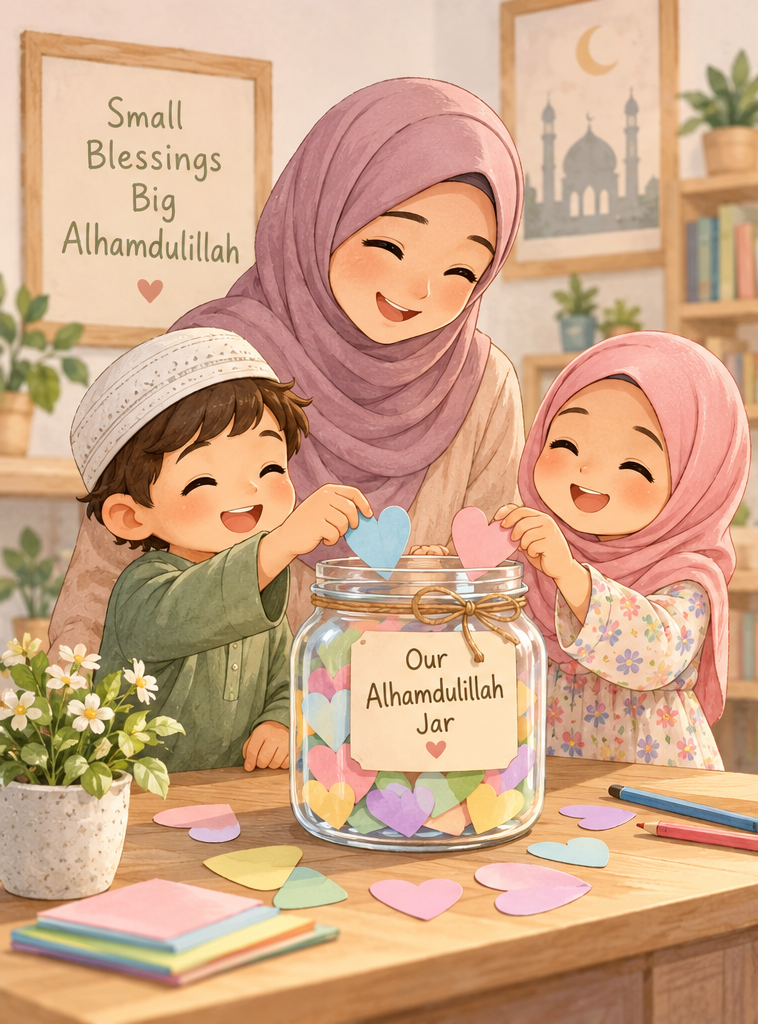
A gratitude jar is one of the simplest and most enjoyable ways to help children recognize their blessings.
You will need:
An empty jar or small box
Colored paper
Pencils or crayons
A label that says “Our Alhamdulillah Jar”
How to do it:
Decorate the jar together.
Cut small pieces of colored paper into hearts, stars, or circles.
Every day, ask each family member to name one blessing.
Write or draw the blessing on a piece of paper.
Place it inside the jar.
At the end of the week, read the blessings together.
You might be surprised by what your children notice!
One child may say, “I’m thankful for my new bicycle.”
Another may say, “I’m thankful because Mama read me a story.”
Both are wonderful opportunities to remember Allah.
Islamic connection: Remind children that blessings can be big or small, and we should thank Allah for all of them.
Practice Gratitude at Mealtimes
Mealtimes provide natural opportunities to teach Islamic manners and gratitude.
Before eating, remind children to say Bismillah.
After eating, encourage them to say Alhamdulillah.
You can also begin a simple family conversation:
“How many blessings helped bring this food to our table?”
Children may mention farmers, rain, sunshine, shops, and the person who prepared the meal.
Explain that Allah created and provides the resources we depend upon.
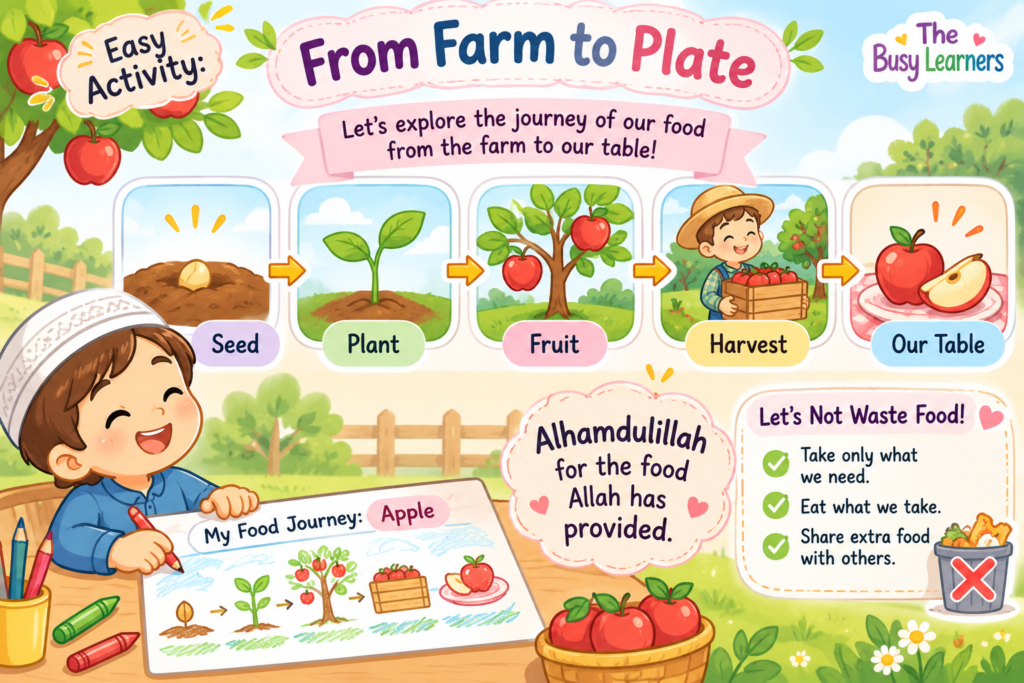
Easy activity: From Farm to Plate
Choose a familiar food, such as an apple or a piece of bread.
Ask your child to draw the journey of that food.
For example:
Seed → Plant → Fruit → Harvest → Our Table
Finish by saying, “Alhamdulillah for the food Allah has provided.”
This activity also introduces children to the importance of avoiding food waste.
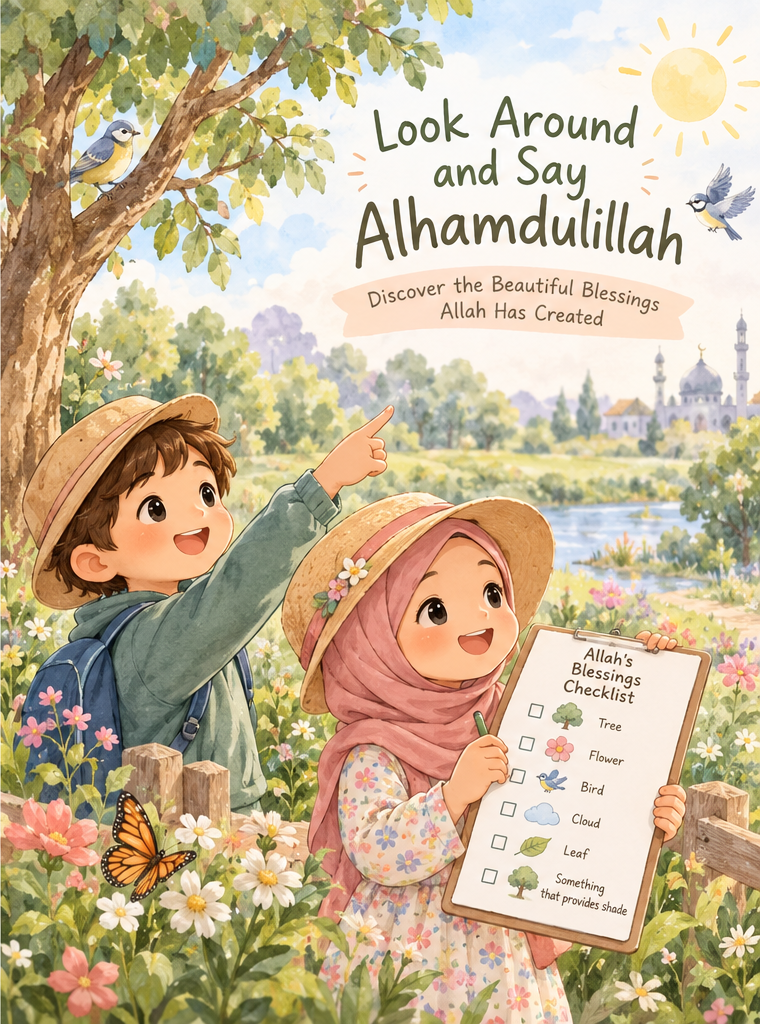
Go on an Allah's Blessings Nature Walk
Children are naturally curious about the world around them.
A short nature walk can become a meaningful Islamic learning experience. Take your child to a garden, park, or even your backyard. Encourage them to notice the beautiful things Allah has created.
Ask:
“Can you find something green?”
“Can you hear a bird?”
“What helps plants grow?”
“How does the sun help us?”
As children observe their surroundings, remind them that Allah created the natural world with wisdom.
Easy activity: Blessings Scavenger Hunt
Give your child a printable checklist featuring:
A tree
A flower
A bird
A cloud
A leaf
Something that provides shade
Children can tick each item when they find it.
At the end, say together:
“Alhamdulillah for Allah’s beautiful creation!”
For older children, encourage them to write one sentence about how each blessing benefits people or animals.
Teach Gratitude Through Helping Others
Gratitude is not limited to words.
Children can also show gratitude by using their blessings to help others.
If a child has many toys, encourage them to share some with a sibling.
If they have learned something useful, encourage them to teach it to a younger child.
If they have food, discuss how they can share it with someone in need.
Easy activity: My Kindness Challenge
Create a simple checklist with five acts of kindness:
Help someone at home.
Share something with a sibling or friend.
Give a compliment.
Take care of your belongings.
Donate something useful, with a parent’s help.
After completing an action, ask:
“How did we use Allah’s blessings to do something good today?”
This helps children understand that gratitude should influence how we behave.
Make Gratitude Part of Bedtime
Before your child goes to sleep, ask:
“What are three things you are thankful for today?”
You can make this part of your family’s nightly routine.
For example:
“Alhamdulillah for playing with my friends.”
“Alhamdulillah for my favorite dinner.”
“Alhamdulillah for spending time with my family.”
If your child has had a difficult day, avoid forcing them to list happy moments.
Instead, acknowledge their feelings and gently help them recognize that difficult days and blessings can exist together.
You might say:
“I know today was hard. Would you like to tell me about it? We can also think about one thing that helped you today.”
Easy activity: Keep a small gratitude notebook beside the bed. Children can draw or write one blessing each night.
Be a Role Model of Gratitude
Children learn a great deal by observing the adults around them.
If parents regularly express gratitude, children are more likely to understand that thankfulness is part of everyday Muslim life.
Try saying:
“Alhamdulillah, we arrived home safely.”
“Alhamdulillah, we had enough food for everyone.”
“Alhamdulillah, Allah helped us through a difficult day.”
You can also show gratitude toward other people.
The Prophet Muhammad ﷺ taught the importance of thanking people.
A hadith narrated in Sunan Abi Dawud 4811 teaches that whoever does not thank people does not thank Allah.
When your child helps you, thank them sincerely.
When someone gives your family a gift, express appreciation.
When another person does something kind, acknowledge their effort.
Remember: Children learn gratitude not only from what we teach but also from what we practice.
Three Helpful Parenting Reminders

Acknowledge feelings
Children can feel sad, frustrated, or disappointed while still being thankful to Allah.
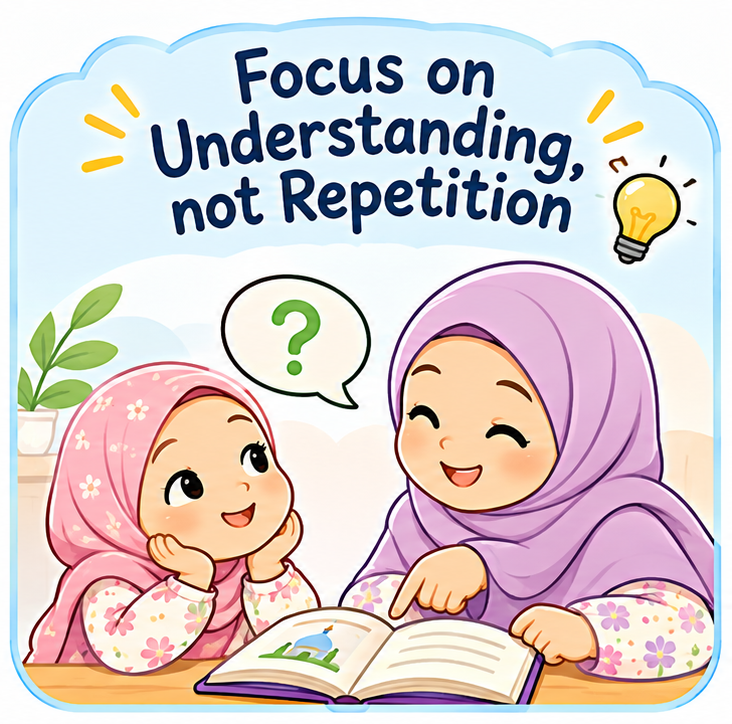
Focus on understanding, not repetition.
Saying Alhamdulillah is important, but help children connect the words with genuine appreciation. Our goal is not to raise children who simply say the right words. Our goal is to nurture children who recognize Allah's blessings and respond with gratitude, kindness, and generosity.
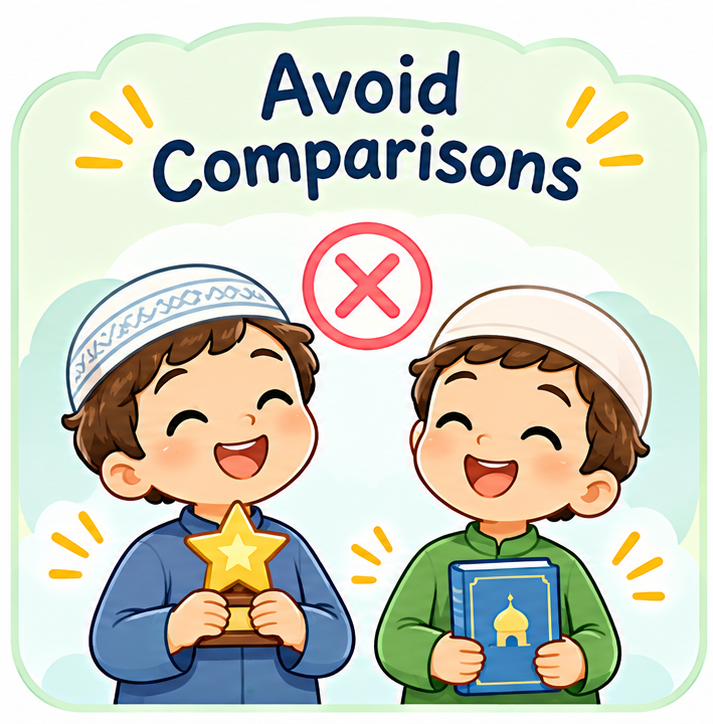
Avoid comparisons
Rather than saying, "Other children have less than you," encourage children to appreciate what they have and develop compassion for those in need.