Let's Learn about Muharram!
A Kid-Friendly Guide to the Blessed Month
Have you ever noticed how excited children become when Ramadan is approaching? They eagerly count down the days, decorate their homes, and look forward to learning about this special month.
But what about Muharram?
As the first month of the Islamic calendar, Muharram offers another beautiful opportunity to introduce children to their Islamic identity, strengthen their faith, and help them understand the importance of following Allah’s guidance.
Yet, for many Muslim parents, teaching children about Muharram can feel a little challenging.
What exactly is Muharram? Why is it sacred? What happened on the Day of Ashura? And most importantly, how can we explain these important Islamic concepts in a way young children will understand and enjoy?
The good news is that teaching Muharram to kids doesn’t need to involve lengthy lessons or complicated explanations.
Through meaningful conversations, inspiring stories from the Sunnah, creative activities, and hands-on Islamic worksheets, you can transform this sacred month into a memorable learning experience.
In this guide, we’ll explore everything you need to know about teaching Muharram to children, along with simple activities you can start at home or in your classroom.
What is Muharram?
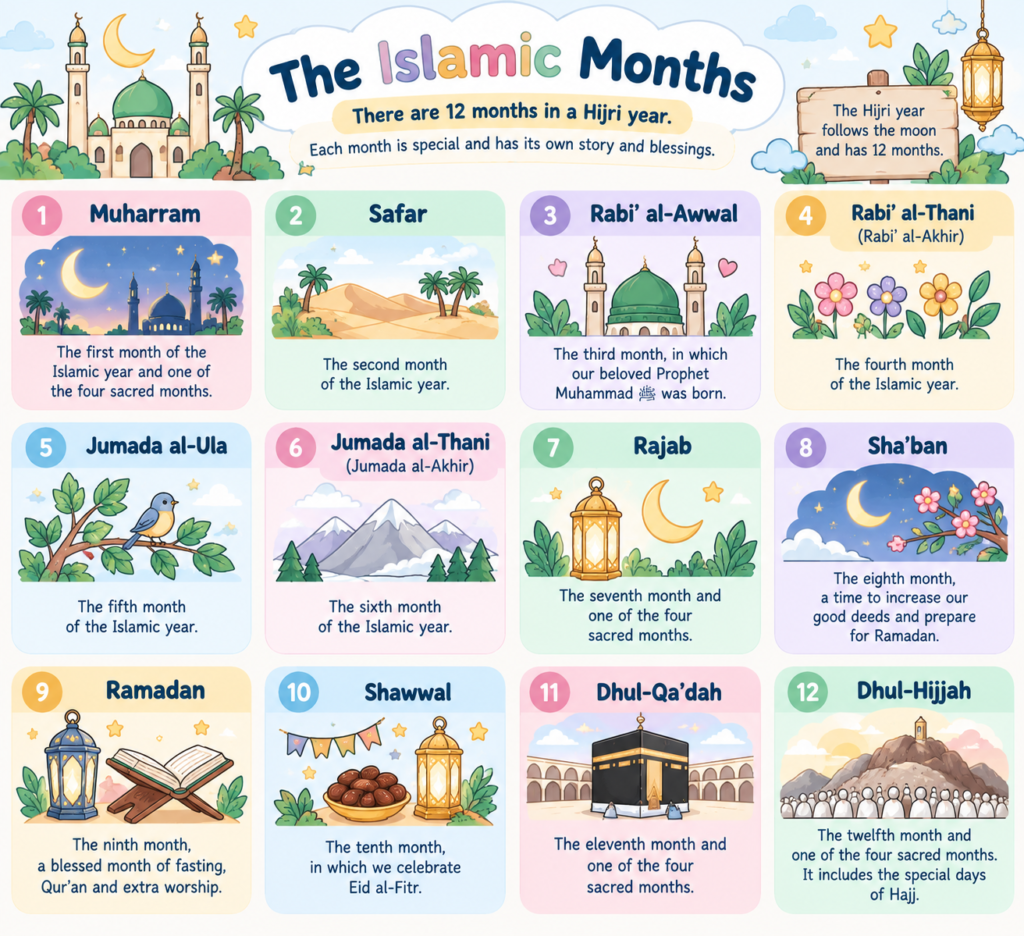
Muharram is the first month of the Islamic (Hijri) calendar. It marks the beginning of a new Islamic year and is one of the four sacred months chosen by Allah.
The word “Muharram” means “forbidden” because fighting and injustice were prohibited during this sacred month.
Muharram is the first month of the Islamic Hijri calendar. It marks the beginning of a new Islamic year and is one of the four sacred months honoured by Allah.
Unlike the Gregorian calendar, which follows the solar year, the Islamic calendar follows the moon. Each Islamic month begins according to the lunar calendar, and the Hijri year consists of approximately 354 or 355 days.
This means that Muharram moves through different seasons over time.
How to explain Muharram to young children
You can say:
“Just like we have January as the first month of the regular calendar, Muslims have Muharram as the first month of the Islamic calendar. Allah has made Muharram a special, sacred month, and it reminds us to do good deeds and stay away from wrong actions.”
For younger children, use a simple calendar illustration and point out Muharram as the first of the twelve Islamic months.
Why is Muharram Important?
Muharram is not just the start of a new year—it is one of the most blessed months in Islam. some or the virtues of this month are mentioned below!
It is one of the four sacred months.
Allah selected four months of the year as sacred and Muharram is one of them.
It is the first month of the Islamic calendar.
Muharram reminds Muslims of the Hijrah (migration) and the importance of faith and perseverance.
Good deeds carry special significance.
The sacred months encourage Muslims to increase worship, kindness, and obedience to Allah.
It contains the Day of Ashura.
The 10th day of Muharram, known as Ashura, is one of the most significant days of the Islamic year.
Fasting during Muharram is highly recommended.
The Prophet ﷺ encouraged fasting during this blessed month, especially on the Day of Ashura.
It is a month of reflection and it teaches gratitude.
Children can learn how Allah helped and protected His prophets throughout history. Muharram provides an opportunity to evaluate our actions and make positive changes.
The Story of Ashura: A Powerful Lesson for Children
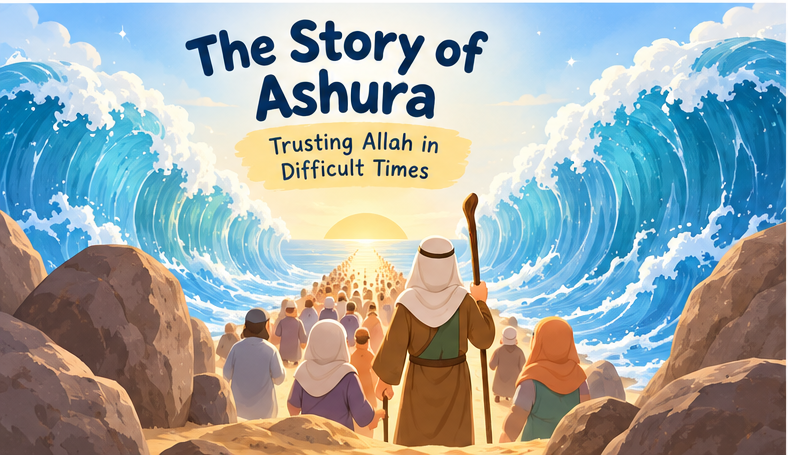
One of the most meaningful ways to teach children about Muharram is through the story of Prophet Musa (AS).
Long ago, Prophet Musa (AS) and the Children of Israel faced great hardship under Pharaoh, a cruel ruler who oppressed them.
Allah commanded Musa (AS) to lead his people away from Pharaoh.
But as they travelled, Pharaoh and his army pursued them.
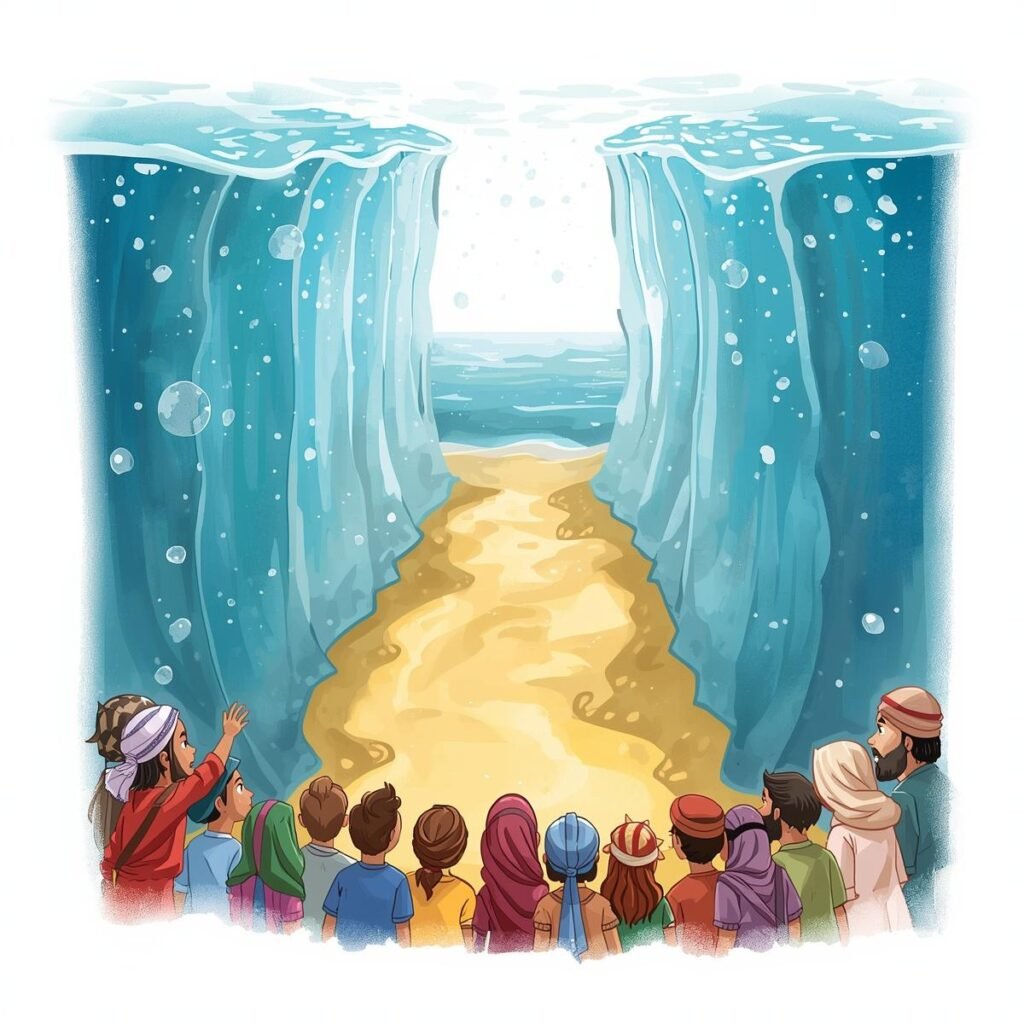
Soon, the Children of Israel found themselves in a frightening situation. The sea lay ahead of them, while Pharaoh’s army was approaching from behind.
The people became afraid.
But Prophet Musa (AS) placed his complete trust in Allah.
He said:
“No! Indeed, with me is my Lord; He will guide me.”
Surah Ash-Shu’ara (26:62), meaning
Allah commanded Musa (AS) to strike the sea with his staff.
By Allah’s power, the sea parted, creating a safe passage for Musa (AS) and his people.
They crossed safely, while Pharaoh and his army were drowned.
Why do Muslims fast on Ashura?
According to an authentic hadith, when the Prophet Muhammad ﷺ arrived in Madinah, he found that the Jewish community was fasting on Ashura in gratitude for Allah saving Musa (AS).
The Prophet ﷺ explained that Muslims have a close connection to Musa (AS), and he fasted on this day and instructed Muslims to fast.
Reference: Sahih al-Bukhari 2004
The Prophet ﷺ also said that he hoped fasting on Ashura would expiate the sins of the previous year.
Reference: Sahih Muslim 1162
Fasting on the ninth and tenth of Muharram is a commonly recommended practice, based on the Prophet’s intention to also fast on the ninth. Some scholars also discuss fasting the tenth and eleventh.
For children who are not yet required to fast, this is a wonderful opportunity to explain the meaning of gratitude, patience, and trusting Allah.
Three lessons children can learn from Ashura

Trust Allah
Even when things seem difficult, Allah has the power to help us in ways we may not expect.
Be thankful
Prophet Musa (AS) and his people were saved by Allah's mercy, reminding us to appreciate His blessings.
Never lose hope
Difficult situations do not last forever, and believers should continue making du'a and doing what is right.
Five Fun and Meaningful
Muharram Activities for Kids
Children learn best when they can see, touch, create, and participate.
Here are seven engaging activities you can use at home, in an Islamic classroom, or during weekend madrasah lessons.
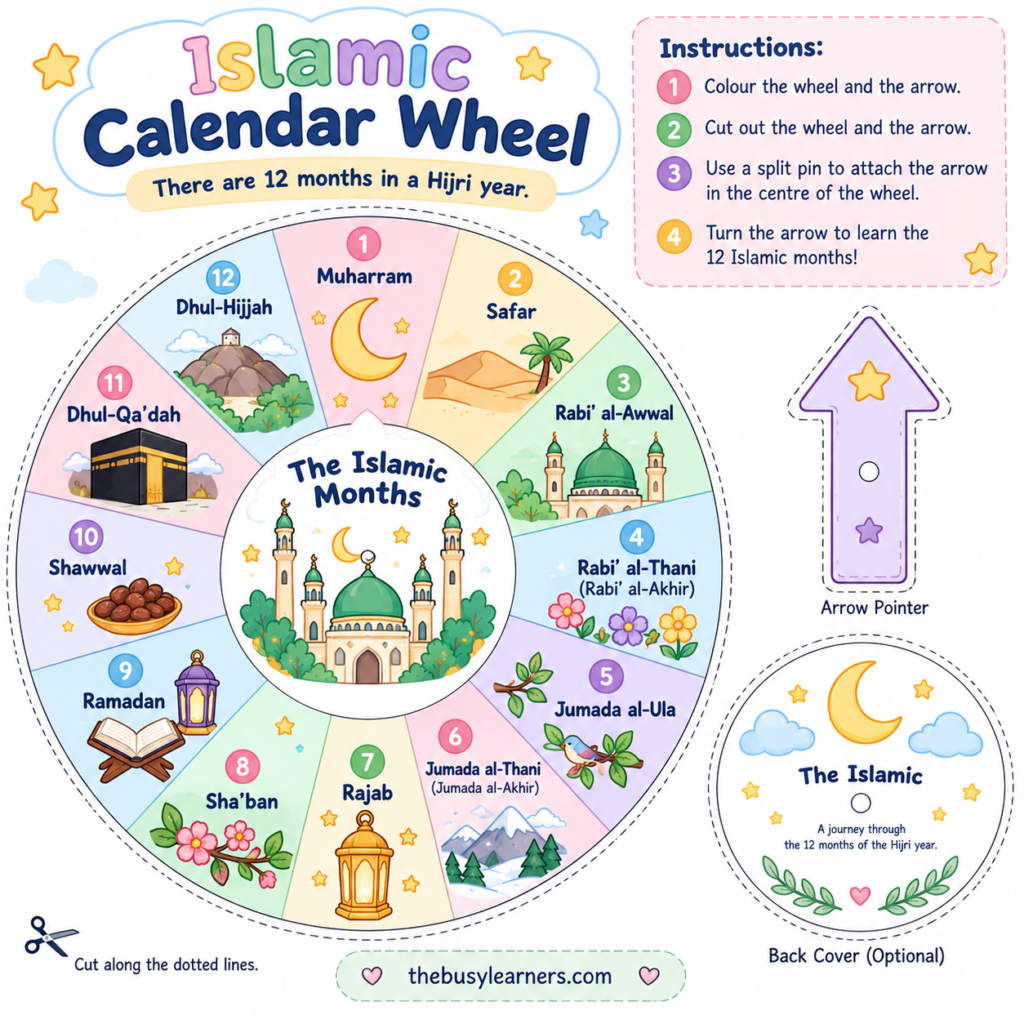
1. Make an Islamic calendar wheel
Create a paper wheel showing all twelve Islamic months. Let your child decorate Muharram with a star or crescent moon, and practise identifying the other months.
2. Start a Muharram good deeds challenge
Prepare a chart with simple daily actions such as helping parents, sharing toys, making du’a, and reading Qur’an. Children can colour a star whenever they complete a good deed.
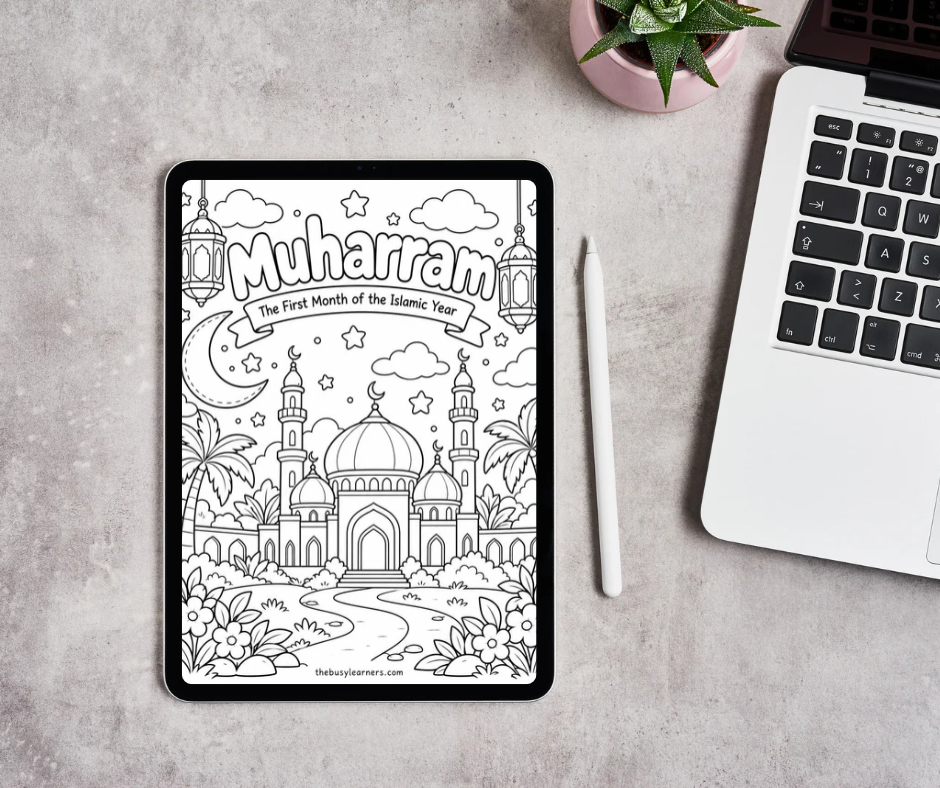
3. Colour a Muharram-themed worksheet
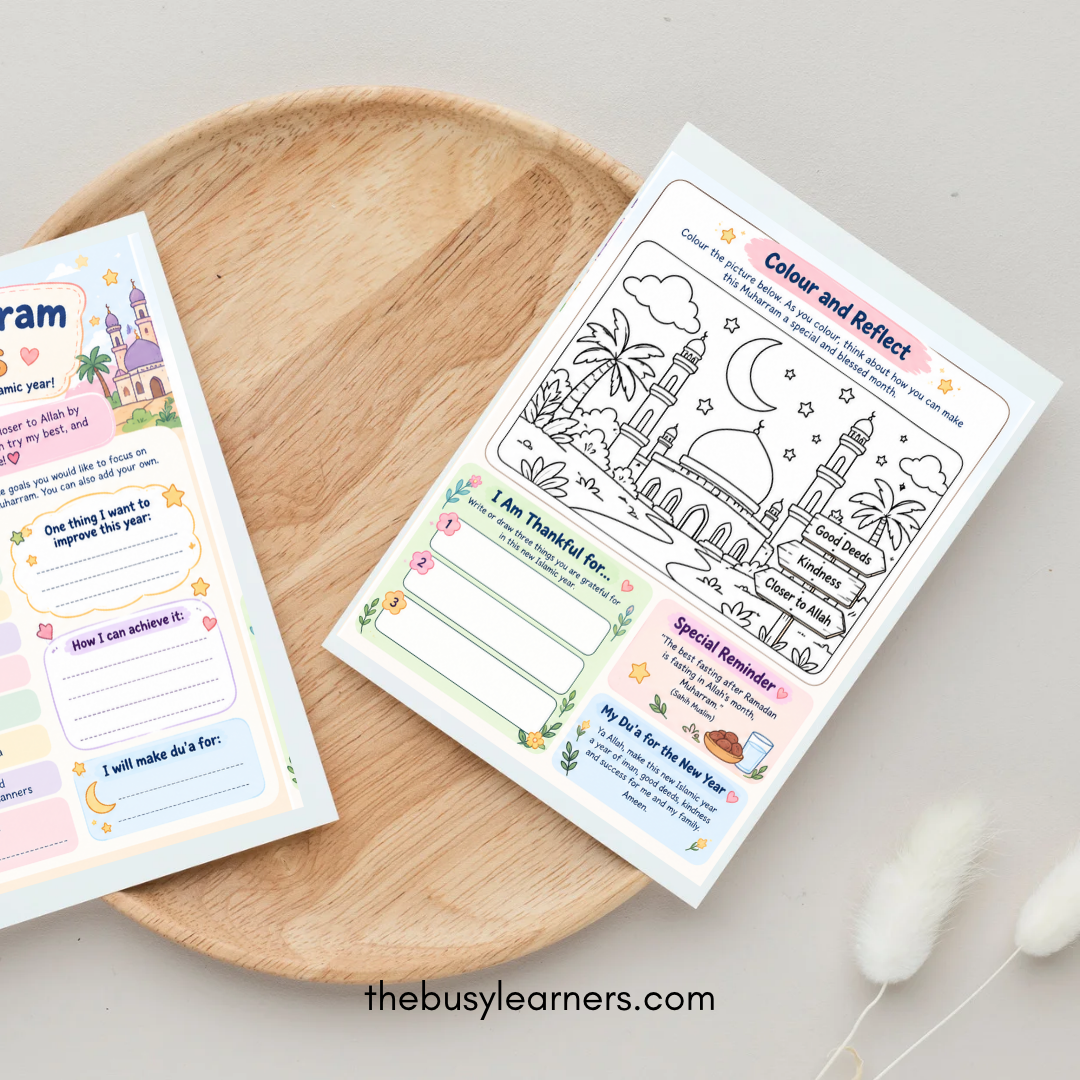
Use colouring pages featuring the Islamic calendar, crescent moons, mosques, and simple reminders about kindness and gratitude. Discuss the lesson while children colour.
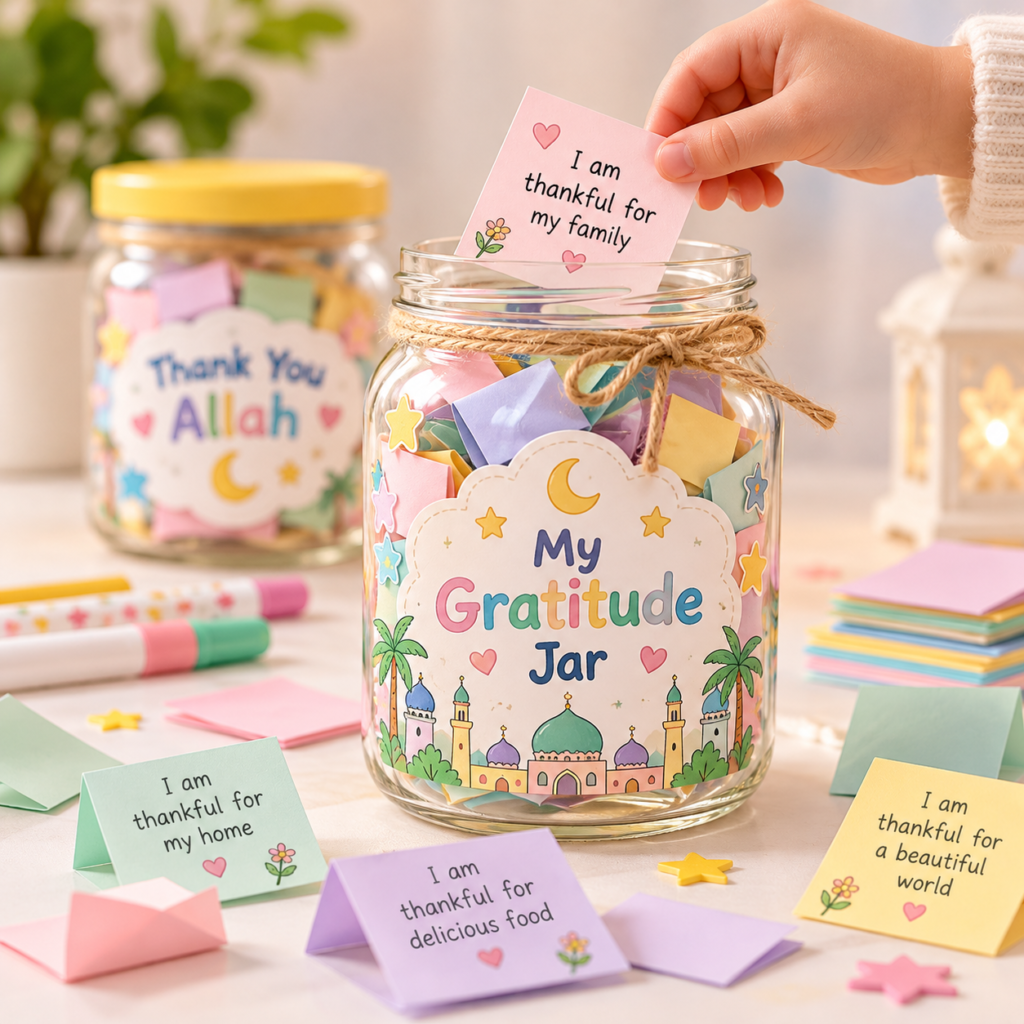
4. Make a gratitude jar
Each day, ask children to write or draw one blessing they are thankful for. Place the notes inside a jar and read them together at the end of the month.
5. Sequence the story of Ashura
Give children illustrated cards showing important events from the story of Musa (AS). Encourage them to arrange the events in the correct order and retell the story.
Looking for a ready-to-use way to teach Muharram without spending hours preparing lessons?
Our Muharram Activity Workbook, available through The Busy Learners on Teachers Pay Teachers, is designed to make Islamic learning more interactive and enjoyable.
It can support parents, homeschoolers, and Islamic educators as they introduce children to the meaning of Muharram, the significance of Ashura, and important Islamic values.
Explore our Muharram Workbook on TPT
Free Muharram Printable for Kids
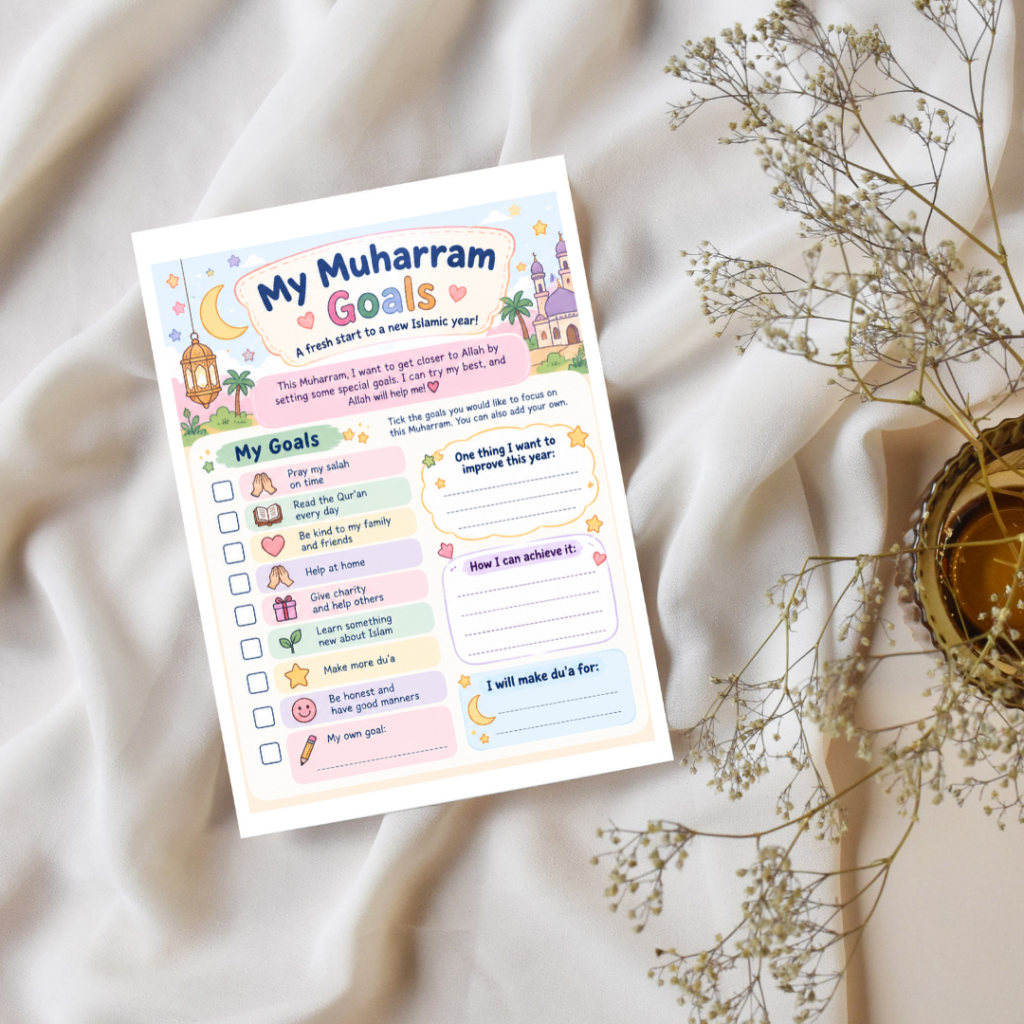
My Muharram Goals
Help your child begin the Islamic year with meaningful intentions and achievable goals.
Children can use this activity to choose simple good deeds, think about how they can improve their habits, and reflect on ways to please Allah.
Perfect for a quick home activity, Islamic classroom lesson, or homeschool introduction to Muharram.
Download our Freebie here!
Continue Learning With The Busy Learners
Explore our Muharram educational resources, try the free printable, and discover engaging activities that help children learn about Islam with confidence and joy.
May Allah make this Muharram a month of beneficial knowledge, gratitude, and spiritual growth for our families. Ameen.